Comparing the Jeep Compass Electric 74 kWh to the Hyundai Kona Electric: Range, Value, and Performance
The market for electric vehicles is highly competitive, but two names consistently climb the sales charts, and driver wish lists: Jeep Ranger Compass Electric 74 kWh and the Hyundai Kona Electric. They’ve truly made modern drivers happy by delivering exactly what’s needed: efficiency, technology and everyday usability. They are a defining moment in the democratisation of electric mobility, and show that you don’t need a six-figure salary to get impressive range and bleeding-edge features. This detailed Jeep Compass Electric 74 kWh review and Hyundai Kona Electric comparison will decipher how these two compact SUVs are raising the bar.
Although the two cars both vie in the highly sought-after compact electric SUV category, the two are very distinct, North and South Poles if you will. The Jeep Compass Electric bears the burden and heritage of a legendary brand synonymous with rugged reliability, now made electric. It has the promise of an adventure-ready ethos with zero-emissions power. On the other hand, the Hyundai Kona Electric has blazed a trail, rapidly establishing itself as a great-value offering with stylish design and a tech-forward experience that challenges the incumbent automotive marques. That offers an intriguing dynamic for buyers: the established legacy of Jeep versus the disruptive innovation of Hyundai. Next up, we will be going head with these powerhouses. We’re going to see how the rugged engineering and brand leg up of the Jeep stack up against the nimble performance and feature-laden cabin of the Kona. The point of this analysis isn’t just to declare a winner, but to figure out which vehicle best suits which priorities. Whether you wanted the comfort that comes with a legendary name or the excitement of revolutionary value and design, this head-to-head will bring much-needed clarity on what to buy in the electric SUV segment.
Key Highlights:
- Market Leadership: The Jeep Compass Electric and Hyundai Kona Electric dominate the compact electric SUV market with the perfect combination of range, performance and advanced technology.
- Opposite Brand Ethos: This is Jeep’s iconic (albeit ageing) off-road and brand supremacy versus Hyundai’s budget pretty-boy tech monster.
- More Features: Both vehicles feature major design changes and new technology that elevate the expectations of mainstream electric-vehicle buyers.
Quick Recap: Jeep Compass Electric 74 kWh Specs vs. Hyundai Kona Electric Highlights
For anyone wishing to know the basic differences between these two market leaders at a glance, we’ve put together a summary of their most important characteristics. Here, you’ll find key Jeep Compass Electric 74 kWh specifications compared to the fundamental aspects of the Hyundai Kona Electric, letting you get a quick feel for which one you’ll be better suited for before we get into full-on technical analysis.
- Manufacturer Philosophy
- Jeep: It embodies heritage, rugged capability and the premium “go-anywhere” spirit transitioning into the electric era without losing its adventurous DNA.
- Hyundai: Emphasises the democratisation of high-tech electric vehicle technology for the mass market through innovative, futuristic design and intelligent efficiency.
- MODEL YEAR & PLATFORM
- Jeep Compass Electric: Model Year 2025. Developed on a specific EV platform (modified STLA Medium platform) to enhance battery density and interior space.
- Hyundai Kona Electric: Model Year 2025. Based on Hyundai’s K3 platform, which has been adapted to accommodate both internal combustion and electric drivetrains, it provides a flexible base.
- Body Type & Segment
- Both Models: 5-door Compact SUV (C-Segment).
- Difference of form: The Jeep has a slightly elongated, more commanding-looking stance that is typical of off-road lineage, while the Kona has a more rounded/crossover-hatchback look that is geared towards city aero.
- Available Trims / Variants
- Jeep: Often streamlined into adventure-focused tiers (Altitude, Summit, off-road-ready Trailhawk conceptually for EV), highlighting luxury and capability volume enhancements.
- Hyundai: A wider selection of trims are available, such as the SE, SEL and Limited, with varying levels of tech features and battery sizes to accommodate a variety of budgets.
- Interior and Exterior Designs
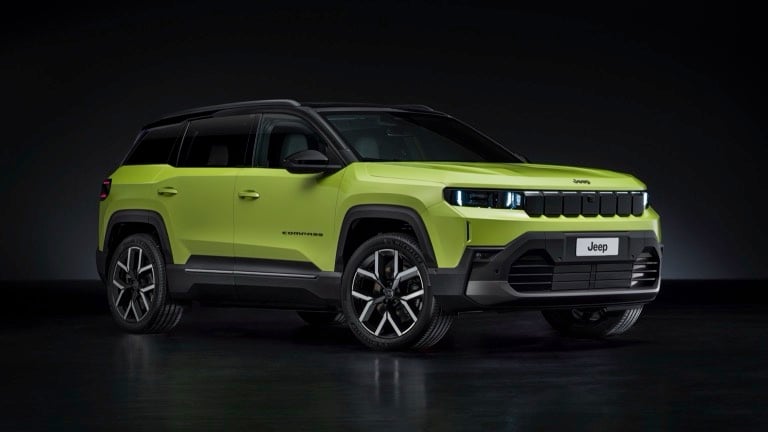
- Jeep: It has the legendary seven-slot grille (restyled), squared wheel arches and an interior that features high-quality, hard-wearing materials with a horizontal dashboard design that gives emphasis to width and stability.
- Hyundai: Displays the “Pixelated Seamless Horizon Lamp” and crisp parametric curves. It follows a floating cockpit theme on the inside, with two panoramic screens, a lounge-like, airy interior.
- Performance and Driving Experience
- Jeep: Built for relentless mixed-terrain composure. The suspension is calibrated to soak up bumps and washboard with a firm, stable feel on the highway and enough confidence to get you across dirt.
- Hyundai: Set for city dexterity. The steering is light and precise, excellent for city driving and the ride is designed to be on the smooth side on tarmacs.
- Powertrain Options
- Jeep: Boasts a hefty 74 kWh battery pack, usually in dual-motor AWD setups that provide greater torque and traction suited for more demanding work.
- Hyundai: Typically has two battery capacities (standard and long-range, about 64.8 kWh), mostly in RWD variants, with an emphasis on getting the most efficiency per kWh, not the most raw power.
- Innovations and Features
- Jeep: The Uconnect 5 system, Selec-Terrain management for EVs, and enhanced energy recuperation modes tailored for descending steep grades.
- Hyundai: Has Vehicle-to-Load (V2L) features that can run external devices, and also offers the SmartSense safety suite and Highway Driving Assist 2.
- Price Range
- Jeep: It stakes its claim to the premium compact class, thanks to its larger battery and brand cachet.
- Hyundai: Offers a more competitive starting price with good bang for your buck, but higher trims are capable of overlapping with the entry price of the Jeep.
Key Takeaways: Feature & Benefit Analysis
- 74 kWh Battery Capacity: With this bigger battery pack in the Jeep, that means more time on the road with more peace of mind for longer trips, as well as reduced range anxiety for those who happen to travel outside of the city.
- FWD vs. AWD Architectures: The Jeep’s priority on all-wheel drive provides superior traction in inclement weather compared to the Kona’s front-wheel-drive architecture, which takes advantage of its urban commuter chops by extracting maximum efficiency and interior space.
- V2L Technology: Thanks to the Kona’s Vehicle-to-Load feature, the car can double as a mobile power bank, making for some practical utility on camping trips or while charging laptops on the go.
- Rugged vs. Futuristic Styling: Jeep’s boxy shape is designed to maximise headroom and cargo space for families, while Hyundai’s sleek silhouette minimises drag to get the most from the battery charge.
Overview & Design Inspirations: A Tale of Two Philosophies
The human narrative is embedded in the DNA of every vehicle; the telling point of expression among each automobile manufacturer is the body shape of the car. The Jeep Compass Electric 74 kWh and the Hyundai Kona Electric are two sides of the same coin when it comes to future interpretations of the small electric SUV. Although both aspire for efficiency and contemporary aesthetic, their paths are miles apart, defined by their own distinctive brand identities. That sets up an interesting contrast between a well-established American icon versus a forward-looking Korean trailblazer.
Jeep design and engineering logic for the Compass Electric is evolution, not revolution. The brand’s mantra might be boiled down to “authenticity electrified.” I think the most important thing is to bring the zero-emission technology while maintaining the tough attitude that can go anywhere that Jeep is defined by. That translates into classic design elements like the seven-slot grille (redesigned for better aerodynamics) and trapezoidal wheel wells that evoke power and off-road competence. The engineering philosophy is to produce a solid platform that will inspire confidence on any terrain. The Compass Electric has been designed to be solid and grounded with the suspension on both city roads and off-road track tuned to suit a heritage of know-how. Meanwhile, Hyundai took a radically different approach with the Kona Electric, one based on pushing the boundaries and changing what a small SUV could be. The design language inspiration is bullishly futuristic, based on “sensual sportiness,” a design ethos that accentuates clean lines with high-tech looks. Most notably, the ’Pixelated Seamless Horizon Lamp’ delivers a distinctive light signature that is unique and up-to-date. Efficient and spacious Hyundai engineering. Developing the Kona Electric with an EV-first philosophy, the engineers created a flat floor and a roomy, lounge-like cabin, proving that they believe in passenger comfort and practical innovation.
Jeep Compass Electric 74 kWh vs. Hyundai Kona Electric: Similarities and Differences
Essentially, both are five-door compact SUVs built for the needs of the modern day, letting you offload practicality and the advantages of electric power. They are head-to-head competitors because they cater for the same customer: one looking for a stylish, efficient and practical daily runabout. But they have very different languages. The familiar, muscular stance of the Jeep Compass Electric, with its premium finishes, is designed to attract older buyers who appreciate brand heritage and the reassurance of rugged security. That appeals to people who might be moving away from traditional SUVs, who want an EV that’s at once capable and comfortingly familiar.
On the other hand, the Hyundai Kona Electric’s masculine, pixelated look and tech-forward cabin heavily suit youthful, progressive consumers. Its design is a statement, a break from automotive tradition and an embrace of the future. This audience cares more about connectivity and more unusual styling, and is more likely to be interested in things such as Vehicle-to-Load (V2L) technology, which suits Hyundai’s forward-thinking and cost-conscious brand perfectly. The contest is intriguing because it is a clash between Jeep’s established, dominant and storied existence, and Hyundai’s disruptive, forward-looking challenger.
Key Highlights:
- Evolution of Jeep Design: Remains dynamic with iconic design cues that radiate strength and capability for a look that is both familiar and modern, that inspires confidence on all road surfaces.
- Hyundai’s Visionary Design: The pixelated lighting signature and sloped profile ensure that the vehicle looks quintessentially futuristic, while improving aerodynamics and interior space.
- Demographic targeting: Ringing true to existing buyers, the Compass Electric’s rugged luxury aesthetic is joined by the Kona Electric’s sleek design and tech features that speak to a younger, more technology-minded audience.
- A Clash of Ideals: This battle is really about Jeep’s tradition of ruggedness and accessibility vs. Hyundai’s vision of bringing this kind of bleeding-edge technology to the masses.
Variants & Trims: A Detailed Breakdown
In trim, as it has your vehicle character, capability and cost defined. Both the Jeep Compass Electric 74 kWh and the Hyundai Kona Electric have quite different versions that best suit different priorities, whether that be essentials for daily driving, or fully loaded with luxuries and performance. Knowing the Jeep Compass Electric 74 kWh variants and the Hyundai Kona Electric trims makes it easy to figure out which option offers the most bang for the buck in your case.
For Jeep Compass Electric, the trim hierarchy draws on the iconic brand’s trailblazing history in adventure and premium comfort. The range generally comprises a well-equipped baseline version with more premium or off-road-oriented variants above. Every level up adds not just cosmetic improvements but actual performance and technology upgrades. For instance, jumping from a base trim, such as a Putnam or Sutton, to a Summit or Overland equivalent typically gets you comprehensive advanced driver-assistance features, a premium audio system, larger infotainment displays, and finer interior materials, including leather upholstery. There are optional packages, such as a Cold Weather group for the heated seats, etc., or a Tech group for the newest digital treasures, so you can personalise your ride to a high degree. Hyundai’s trim levels are designed around the principle of providing value and technology in every price point. The Kona Electric usually offers entry-level SE, mid-tier SEL and higher-tier Limited trim levels. The main differentiator between the lower and higher variants is usually the capacity of the battery and the suite of included technologies. The SE has everything you need for a great EV experience, while the SEL offers some of the most-wanted convenience options. The Limited trim upgrades the Kona to near-luxury status, with a bigger touchscreen, a full suite of Highway Driving Assist tech, and premium features that automotive fans will recognise as typically optional on competitors.
Trim Level Comparison: Jeep Compass Electric vs. Hyundai Kona Electric
| Trim/Variant (Illustrative) | Key Features | Price Point & Value Proposition |
| Jeep Compass Latitude | Uconnect 5 with 10.1″ screen, cloth seats, standard safety suite, 18-inch alloy wheels. | Entry-Premium: Offers the core Jeep experience and all-wheel-drive capability with a solid baseline of modern technology. |
| Jeep Compass Trailhawk | Higher ground clearance, all-terrain tyres, Selec-Terrain with Rock mode, unique red tow hooks, and advanced AWD. | Off-Road Specialist: The definitive choice for adventure seekers who need proven capability on unpaved roads and trails. |
| Jeep Compass Summit | Nappa leather seats, 10.25″ digital cluster, premium Alpine audio, panoramic sunroof, advanced driver-assist. | Peak Luxury: Combines rugged potential with premium comfort and technology, competing with luxury-brand SUVs. |
| Hyundai Kona SE | 12.3″ infotainment screen, cloth seats, standard SmartSense safety features, and Standard Range battery option. | High-Value Entry: Provides an outstanding level of standard tech and safety, making it a top contender for budget-conscious buyers. |
| Hyundai Kona SEL | Long-Range battery, heated front seats, roof rails, optional Convenience Package with a digital key and sunroof. | The Sweet Spot: Balances range, comfort, and price, offering the most popular features for the average daily driver. |
| Hyundai Kona Limited | H-Tex™ leatherette seats, dual 12.3″ screens, Bose audio, Vehicle-to-Load (V2L), Highway Driving Assist 2. | Tech-Forward Flagship: Delivers a near-luxury experience with cutting-edge tech at a mainstream price point. |
Power and Innovation Across Variants
The versatility of each model’s variants also showcases their ranges. With the Jeep Compass Electric, power is usually uniform among the trims, the 74 kWh battery pack and dual-motor all-wheel-drive (AWD) system acting as the base. That’s where the ingenuity lies.” The innovation comes from how that power is managed. The Trailhawk trim, for example, features an enhanced version of the Selec-Terrain system that’s been fine-tuned for electric torque delivery, enabling you to dial in your… Selec-Terrain settings Selec-Terrain is Jeep’s off-road management system that offers five settings (Auto, Snow, Sand/Mud, Rock and Low) for different terrains. The higher trims introduce new in-cabin experiences, including the latest Uconnect 5 software with personalised profiles and integration with your smartphone.
It’s a more defined powertrain and capability choice for the Hyundai Kona Electric variants. Buyers may select a standard-range battery for city commuting or a long-range battery for longer journeys, both of which have an impact on price and utility. The innovation is democratic; even the base SE model gets a massive 12.3-inch infotainment screen. Moving up to the Limited trim, you’ll have access to Hyundai’s most advanced options, such as Highway Driving Assist 2, which enables hands-on sophisticated lane-centring and adaptive cruise control, and useful Vehicle-to-Load (V2L) capability.
Key Highlights:
- Progressive Upgrades: The Jeep’s trim walk adds strata of luxury and off-road capability based on a rugged all-wheel-drive system.
- Value-Oriented Tiers: Hyundai’s levels of trims are designed to provide the best technology and features available at each price point, with a significant jump in range and convenience.
- Segmented Performance: The Compass Electric Trailhawk comes with its own hardware and software to provide real off-road capability, a major differentiator in the segment.
- Innovation Within Reach: The Kona Electric includes upscale features, such as a sizeable infotainment screen, as standard, and it keeps hold of more-focused flagship technologies, including V2L and the most advanced driver aids, for its top trim.
Different Variants: Tailoring Power and Innovation to Your Needs
Exploring further into the specific variants the brands offer for the Jeep Compass Electric 74 kWh and Hyundai Kona Electric, one can see how they tailor their models for very specific driver types. It’s not simply a matter of stacking on features; it’s about experiences that are curated. The merits of each trim are how they express their respective brand’s identity, Jeep’s rugged capability and Hyundai’s attainable technology.
Jeep Compass Electric 74 kWh models can be broadly categorised in terms of luxury versus off-road aptitude, with a common trait of competence and high-performance. The Latitude is the entry-level model to the brand’s premium EV experience. The secret is delivering the power of all-wheel drive as a standard rather than an extra, paired with an energetic 74 kWh battery, so you don’t have to worry about sacrificing performance. Their main twist here is to offer up Jeep’s iconic capability, but in an electric form factor from the get-go.
The Trailhawk version is the next step up and makes some major modifications to turn the Compass Electric into an actual trail conqueror. Its strength lies in its dedicated hardware and software. Among the upgrades are a raised suspension for better ground clearance, underbody skid plates for battery protection, and a dedicated “Rock” mode in the Selec-Terrain system. It’s been recalibrated to handle the instant torque of the electric motors for accurate crawling at low speeds. The Trailhawk isn’t just an appearance package; it is a real engineering evolution for electric off-roading. The Summit, on the other hand, turns its sights to interior luxury and technology enhancements. Its ability to That’s what you get with Nappa leather, a big panoramic sunroof, and a full suite of advanced driver-assistance systems, among other things. The focus of the changes here is to enhance the user experience to compete with the more established luxury brands.
Hyundai’s take on its Kona Electric trims is based around relatively simple value propositions. The best aspect of the SE trim is the great baseline offering it has. The introduction of a large 12.3-inch infotainment screen as standard is the most significant innovation, as this is a feature that, for value buyer models, is normally limited to higher trims. This establishes right away the Kona as a tech-forward pick, even if you’re going based on the lowest price. The availability of a standard-range battery makes it a practical and inexpensive choice for a city car. SEL is the best value trim in the lineup. Its strength is equilibrium. In making the long-range battery standard, it tackles the range anxiety that can hold back first-time EV buyers. The main difference to the SE is that it gains some comfort and convenience features, such as heated seats and roof rails, making it a more all-around daily chariot for families and commuters. Enhancing the value of the optional Convenience Package are the highly desired tech features, including the Digital Key. Lastly, the Limited trim is a tour de force of Hyundai’s tech ambition. Its strength: bringing flagship features into the hands of mainstream users. The biggest new features here include Vehicle-to-Load (V2L) technology, which turns the car into a mobile power source, and Highway Driving Assist 2, which provides a highly advanced, semi-autonomous driving experience. This version is for the tech enthusiast who wants to enjoy the latest innovations without the luxury price tag.
- Specialised Trailhawk Engineering: It gives you the best off-road credentials in the segment with unique hardware upgrades and electric torque software calibrations.
- Kona Tech as Standard: Enjoy a high-tech lifestyle right from the entry point with a big standard infotainment screen that brings everyday brightness.
- Summit’s Premium Approach: Takes the interior to new levels of luxury together with the latest driving support technology for added convenience and well-being on daily commutes.
- Limited’s V2L Innovation: You get a practical, real-world utility to power your outside electronics through the vehicle, a feature that really stands out if you are a camper or an outdoor worker.
Jeep Compass Electric 74 kWh vs. Hyundai Kona Electric: Spec Sheet Appendix
For a direct comparison with a quick overview, this technical appendix is a brief snapshot of some of the key specs quoted by manufacturers for the Jeep Compass Electric 74 kWh and the Hyundai Kona Electric. These numbers tell an objective story of fundamental capabilities, from battery chemistry to physical size. Note that specs like range and charging times may differ by market, trim level, optional equipment such as tyres or environmental conditions.
This specification sheet is a compulsory add-on for any in-depth review of the Jeep Compass Electric 74 kWh, and comparing raw numbers has never been easier. It translates complicated engineering into digestible figures and allows the fundamental differences between each manufacturer’s solution to electric vehicle design to be understood. If you want to know about the longest range, fastest charging or most powerful vehicle for your application, this table gives you the information you need.
| Specification | Jeep Compass Electric 74 kWh (Illustrative) | Hyundai Kona Electric (Long Range) |
| Battery & Range | ||
| Battery Capacity (Usable) | 74 kWh | ~64.8 kWh |
| Quoted Range (WLTP) | Up to 440 km (273 miles) | Up to 490 km (304 miles) |
| Performance | ||
| Motor Configuration | Dual Motor All-Wheel Drive (AWD) | Single Motor Front-Wheel Drive (FWD) |
| Power Output (Combined) | ~240 hp / 179 kW | ~215 hp / 160 kW |
| Torque (Combined) | ~450 Nm | ~255 Nm |
| 0-100 km/h (0-62 mph) | ~7.0 seconds | ~7.8 seconds |
| Charging | ||
| Max AC Charging Speed | 11 kW | 11 kW |
| Max DC Fast Charging Speed | ~125 kW | ~102 kW |
| DC Fast Charge Time (10-80%) | Approx. 30 minutes | Approx. 41 minutes |
| Dimensions & Capacity | ||
| Length | ~4,420 mm | ~4,355 mm |
| Width (without mirrors) | ~1,874 mm | ~1,825 mm |
| Height | ~1,640 mm | ~1,575 mm |
| Cargo Volume (Seats Up) | ~450 litres | ~466 litres |
| Cargo Volume (Seats Down) | ~1,350 litres | ~1,300 litres |
| Special Features | Selec-Terrain® with EV modes | Vehicle-to-Load (V2L) Capability |
- Battery Size vs. Efficiency: The Jeep’s 74 kWh battery allows for a large capacity, and Hyundai’s design extracts an astonishing range from a much smaller 64.8 kWh battery pack, indicating a priority for efficiency.
- Higher Power and Traction: The Compass Electric comes with standard dual-motor AWD that delivers more horsepower and significantly higher torque, which means higher acceleration and better all-weather traction.
- Faster Charging: The Jeep is designed with a higher maximum DC fast charging speed to spend less time charging while on the road.
- Size and Proportion Differences: The Compass is wider and taller, giving it a powerful SUV look, while the Kona Electric has milder boot space with the rear seats up, which is a testament to practicality.
Jeep Compass Electric 74 kWh vs Hyundai Kona Electric Performance & Driving Experience
The real nature of an EV is only apparent when you’re out on the road, not when reading a spec sheet. Although range and charging rates frequently make headlines and dominate the headroom of EV buyers, the day-to-day joy of owning an EV is more about how an EV goes around the corner, how it soaks up a pothole, and how it delivers when you step on the gas. In this part of our Jeep Compass Electric 74 kWh review, we focus on the driving experience, pitting the American brand’s rugged engineering against the Korean contender’s city-slicker agility.
Power Delivery and Motor Specifications
Beneath the metal, the two SUVs follow different trajectories to electric propulsion. The Jeep Compass Electric is equipped with a dual-motor configuration based on its massive 74 kWh battery. This setup offers permanent all-wheel drive (AWD), which is one of the brand’s signature features. The system produces a strong estimated output of 240 horsepower (179 kW) with 450 Nm of torque. The throttle response is calibrated for immediate, forceful acceleration, which is necessary in on-ramp highway traffic and when riding trails at low speeds. The single-speed transmission is designed to smoothly absorb this torque, so that power is always there when you need it, and you don’t have to deal with getting“rubber-banded,” like you sometimes do with CVTs.
By comparison, the Hyundai Kona Electric (in Long Range form) is a single motor driving the front wheels (FWD). While it surrenders some brute force to the Jeep, making around 215 horsepower (160 kW) and 255 Nm of torque, it feels lively thanks to its lower curb weight. The Kona’s power delivery is linear and polite. It will not throw you back into the seat quite as violently as the dual-motor Jeep does, but it has more than enough oomph for city streets. It has a seamless transmission that focuses on efficiency and smooth coasting rather than sustainable power output.
Behind the Wheel: Handling and Ride Quality
Driving the Compass feels as solid as the Jeep brand should. You can feel the engineering DNA of a brand that builds cars to survive the Rubicon Trail. The suspension design is also advanced, employing a unique, fully independent multi-link rear design that efficiently deals with the battery’s weight. On the highway, the ride is planted and composed; crosswinds and passing trucks barely register. On the heavier side, this weighted steering offers a confidence-inspiring feel, which lets you know precisely what the front wheels are up to. It soaks up road irregularities with a muffled thud instead of a din, keeping passengers from feeling the jarring of cracked pavement.
The driving experience in the Hyundai Kona Electric is completely different. It’s certainly nimble. The springs are also firmer than a Jeep’s, to reduce body roll on corners, but it makes more road noise in the cabin. The steering is light and responsive, so it’s easy to weave through traffic or make tight turns in parking garages. It’s more of a raised electric hatchback than a normal SUV. On the other hand, on uneven terrain, the Kona can seem a little jittery when/contrasted to the composure of the Jeep, as a reminder that its main playfield is not the gravel track, but the paved city road.
Driving Modes and Adaptability
Both vehicles have selectable driving modes for adjusting the driving experience, but how you use them is a little different. The Jeep comes with the famous Selec-Terrain® system, modified for electrification. In addition to the traditional Auto, Sport and Eco modes, there are Snow, Sand/Mud and (on Trailhawk models) Rock mode. These modifications control, in a very pronounced way, how torque is divided along with traction control intervention, having the Compass find grip where others would be spinning their wheels.
The drive modes for the Kona Electric, Eco, Normal, Sport, and Snow are based on throttle mapping and regen braking intensity. Sport mode increases the responsiveness of the accelerator significantly, making the car more eager, whereas Eco mode dials it down to increase driving range. A real highlight for the Hyundai is the paddle-shifter-controlled regenerative braking on the steering wheel that lets drivers cycle through levels of regen as you drive, making one-pedal driving even more engaging.
Acceleration & Drive Mode Comparison
| Feature | Jeep Compass Electric 74 kWh | Hyundai Kona Electric |
| 0–100 km/h (0-62 mph) | ~7.0 seconds | ~7.8 seconds |
| Top Speed | ~170 km/h (105 mph) | ~167 km/h (104 mph) |
| Drivetrain | Dual-Motor e-AWD | Single-Motor FWD |
| Driving Modes | Auto, Sport, Eco, Snow, Sand/Mud, (Rock on Trailhawk) | Eco, Normal, Sport, Snow |
| Regen Braking | Selectable levels via the screen | Paddle-shifter controlled (multi-stage) |
| Suspension Feel | Dampened, compliant, heavy-duty feel | Stiff, sporty, agile feel |
Key Highlights:
- Torque Advantage: The dual motors of the Jeep Compass Electric deliver substantially more torque, resulting in stronger acceleration and towing capacity.
- Ride Quality: Jeep’s suspension tuning delivers a more isolated and upscale ride over the rough stuff than the firmer Kona.
- Urban Agility: The Hyundai Kona Electric performs particularly well in city traffic with light steering and a nimble chassis that makes driving a breeze.
- Ground Terrain: Selec-Terrain technology provides the Jeep an easy-to-use advantage in versatility, with tailored modes for inclement weather and loose terrain not found in the Kona.
Jeep Compass Electric 74 kWh vs Hyundai Kona Electric Interior, Comfort & Technology
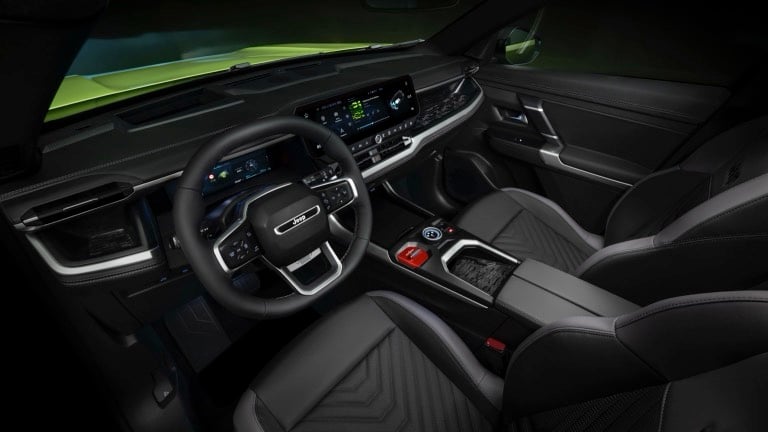
To be sure, popping into a modern EV today is a bit like going into a cockpit, where automotive engineering becomes more consumer electronics. The Interior You live in, you use the machine, and comfort and utility meet in the place you spend your time. In a head-to-head in this vital segment of our Jeep Compass Electric 74 kWh review, we pit this tough American newcomer against the tech-savvy Hyundai Kona Electric. Each brand treats the cabin differently; let’s just say they’re worlds apart, showcasing their general brand philosophies.
Cabin Design and Material Quality
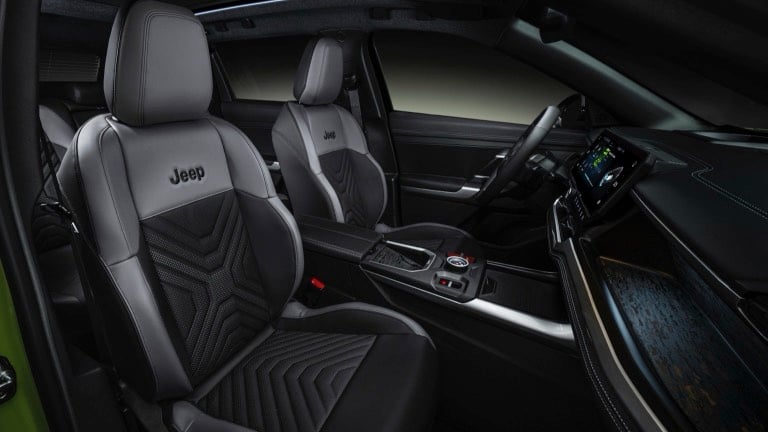
The interior of the Jeep Compass Electric 74 kWh will appeal to Pulsar owners and lovers of the brand; it is surprisingly completely modern for an electric age. Jeep has a priority for a solid feel and horizontal width. The lines on the dash are clean and horizontal, creating a sense of space in the cabin. The materials are selected for a balance of premium feel and good durability, soft touch plastics on the upper part of the dash and door sills, with some stitched detailing on higher specs like the Summit. The overall look is “rugged luxury, functional enough for a weekend camping trip but polished enough for a client dinner.
In contrast, the Hyundai Kona Electric interprets a “living space” philosophy. Its cabin is airier, more futuristic-looking, thanks mainly to the thin, floating dashboard and the elimination of the conventional gear shifter from the centre console (it’s now mounted on the steering column). That creates a lot of space between the front seats for storage. Hyundai is making a big statement with sustainable materials, using environmentally beneficial textiles and recycled plastics. The design is made for the modern era, and it looks very impressive, but some of the tactile points are a little harder, more industrial, than the soft surfaces of the upper-level Jeeps.
Infotainment and Connectivity
Technology is the battlefield for today’s EVs, and these two have big guns to bring to the fight. The Jeep Compass Electric enjoys the excellent Uconnect 5 system, displayed on either a sharp 10.1-inch or larger central touchscreen. Uconnect 5 is considered one of the most user-friendly systems in the market with fast response times, easy-to-understand graphics and user profiles that are customizable. Wireless Apple CarPlay and Android Auto come standard, allowing you to integrate your smartphone with the vehicle seamlessly. The digital instrument cluster is just as good, and lets you switch between navigation, off-road gauges and media data without any problems.
With Hyundai, the bar for screen time size real estate is high. The Kona Electric generally runs a panoramic display, wrapping dual 12.3-inch displays, one for the instrument cluster and the other for infotainment, under a single continuous glass panel. This arrangement looks upscale and high-tech, taking over the driver’s sight line. The interface is clean and intuitive with colourful graphics. Hyundai’s Bluelink+ connectivity package has a full complement of advanced remote capabilities that include remote charging, scheduling and cabin temperature pre-conditioning, as well as the ability to lock/unlock the doors using a smartphone. While the Jeep’s system is solid and plenty functional, the Hyundai’s looks like a gadget lover’s utopia.
Comfort, Ergonomics, and Storage
Comfort is subjective, but ergonomic is objective. The Jeep Compass Electric also has a traditional SUV seating position, high and commanding. The seats are supportive as a rule, with a good amount of bolstering to keep you in place on the rougher trails. On the storage front, the Jeep sticks to its utilitarian roots, offering practical items like deep door pockets and a large centre console bin. Good headroom is provided for rear-seat passengers by the boxier shape of the car, so it’s also a good place for tall adults to sit.
The Hyundai Kona Electric surprises with its smart packaging. By shifting the gear selector, the centre console transforms into a multi-use storage surface that includes retractable cupholders and a large open tray for bags or other large items. The seats are thinner to maximise rear legroom, but the rear “Curveless Bench Seat” is flatter than the Jeep’s moulded bench. While the Kona is super roomy for its size, the sloping roofline, which is part of its aerodynamic profile, can reduce rear headroom slightly for very tall passengers compared with the Jeep.
Advanced Tech and Safety Innovations
Both vehicles are well equipped with Advanced Driver Assistance Systems (ADAS), but they do so in different ways. Active driving assist, traffic sign recognition and drowsy driver detection are combined with the Jeep. The Compass boasts a surround-view camera system with off-road view trims, a great help in spotting trail obstacles that could blind you out on the trail.
Hyundai has its SmartSense suite, which features Highway Driving Assist (HDA). On higher grades, HDA 2 incorporates lane-change assist and leverages machine learning (ML) to learn your driving style. It doesn’t stop there; the Kona is also equipped with the Blind-Spot View Monitor, which displays a live video feed of your blind spot on the digital cluster when you signal, a minor yet revolutionary safety feature. Plus
With the Kona’s Digital Key 2 Touch, you can also use your smartphone or smartwatch as a key, and digitally share access with friends or family.
Key Highlights:
- Design Philosophy: The Jeep agenda is a rugged premium environment leaning on ruggedness and traditional luxury, while the Hyundai is a modern, airy “living space” with sustainable materials.
- Infotainment Excellence: Jeep’s Uconnect 5 is widely considered one of the fastest and most user-friendly infotainment systems; Hyundai wows with eye-popping dual, panoramic 12.3-inch screens.
- Storage Solutions: While the Compass adheres to the deep, secure SUV typical storage, the Kona Electric takes function to another level, with a floating console and open storage trays.
- Safety Tech: Innovative features such as the Blind-Spot View Monitor and Digital Key put Hyundai in the lead, Jeep delivers with trail-specific camera systems, and the basics of a solid active safety package.
Jeep Compass Electric 74 kWh and Hyundai Kona Electric Design & Exterior
The purpose of a vehicle is clear from its design long before it ever rolls along the ground. In the Jeep Compass Electric 74 kWh Design and the Hyundai Kona Electric Exterior, we watch two polar opposite approaches: One looks back to a storied past, the other dashes forward to a digital future. This part breaks down the design, the architecture of the body, and the rest of the outside elements that make these two very different electric SUVs.
The Jeep Compass Electric: Heritage Evolved
For Jeep, the challenge with the Compass Electric was bringing a classic up to date without destroying the essence of what it was. The end result is a design that feels comfortably sturdy. The architecture maintains the brand’s iconic boxy shape, which allows for maximum interior headroom and exudes a posture of unwavering certainty.
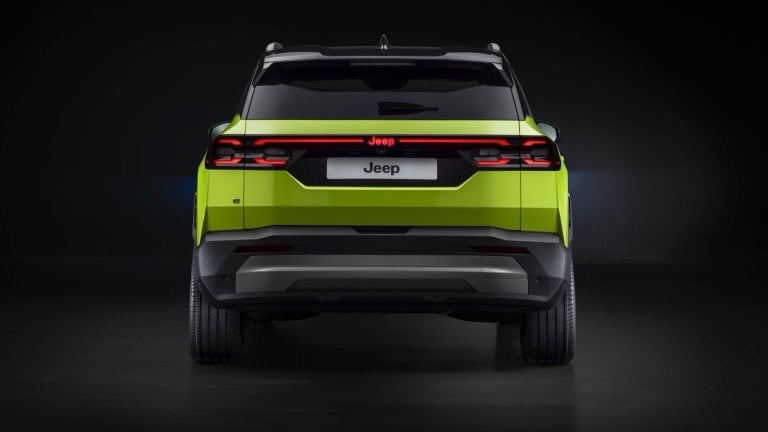
The most dramatic changes can be seen on the front end. The iconic seven-slot grille remains the hero, but for the Jeep Compass Electric 74 kWh, it’s been reinvented. Too busy as an air intake for a combustion engine, now it is a textured, closed-off shield that contains sensors and enhances aero efficiency. The lighting signature is clean and horizontal, perfectly integrated with the grille that expands the vehicle’s visual width.
Along the sides, the trapezoidal wheel wells, an inviolable Jeep element, are deep and large, filled with large wheels hinting at the vehicle’s traction capabilities. The exterior tempers are finely tuned, too, with rugged cladding encapsulating the lower portion to keep paint safe from rock chips on trail runs. It’s a design that begs for ‘adventure,’ even when nestled in a city centre car park.
The Hyundai Kona Electric: Parametric Futurism
Hyundai Kona Electric, Exterior: Leading the charge. The Hyundai Kona Electric exterior is a statement of electric age boldness. Hyundai designers began with the EV model first, rather than working off a petrol chassis; the result is a fully integrated, aerodynamic profile with a drag coefficient of just 0.27.
The headline is the “Pixelated Seamless Horizon Lamp” – a single strip of light that runs across the bonnet. This results in a very distinct front end for the Kona with a seemingly angry expression that is very easily identified at night. The body uses “parametric dynamics, sharp, diagonal intersects of geometry, which expresses a sense of energy even when the vehicle is static.
The Kona, meanwhile, integrates its wheel arch protection into the headrest and taillight clusters, rather than Jeep’s usual chunky rugged cladding. It results in a cohesive, “armour-like” graphic that dissects the sheer of the car. The rear continues the party in the front with a pixelated light bar that extends the digital-native narrative. It certainly is a polarising design, but it’s one that seems very definitely of the moment.
Design Comparison Breakdown
To help you visualise the differences, we have broken down the key styling elements in the table below.
| Feature | Jeep Compass Electric 74 kWh | Hyundai Kona Electric |
| Architectural Stance | Upright, muscular, and boxy; prioritising ground clearance and a traditional SUV silhouette. | Low-slung, aerodynamic crossover profile; prioritising wind resistance and efficiency. |
| Lighting Signature | Refined LED headlamps integrated with the grille; classic rear taillights with a modern LED twist. | Pixelated Seamless Horizon Lamps front and rear; distinct parametric pixel graphics. |
| Front Grille | Reimagined closed-off seven-slot grille acting as a shield; retains brand heritage. | Completely smooth, grille-less nose with active air flaps and a central charging port. |
| Body Detailing | Functional black cladding on rockers and arches for trail protection; squared-off wheel arches. | Body-coloured or contrasting “armour” integrated into light clusters; sharp diagonal character lines. |
| Aerodynamics | Functional aero-curtains and active grille shutters to manage airflow around a brick-like shape. | Sweeping roofline and active air flaps designed specifically to minimise drag coefficient (0.27 Cd). |
| Colour Palette | Typically features earth tones and classic metallics (e.g., Sting Grey, Alpine White) with optional black roofs. | Often showcases vivid, digital-inspired hues (e.g., Neoteric Yellow, Cyber Grey) reflecting a tech vibe. |
Key Highlights:
- Distinct Identities: The 74 kWh Jeep Compass Electric Design is an expression of rugged sophistication and heritage, the Hyundai Kona Electric Exterior is clean and simple with a strong focus on futuristic and aerodynamic efficiency.
- Signature Lighting: Among Hyundai’s many twists on “Parametric Pixels,” it has created a distinctive, tech-heavy visual signature, while Jeep uses thin LEDs to give its classic face a modern look.
- Aerodynamic Approach: Jeep is taking the traditional boxy shape and giving it active aero elements; Hyundai is designing the entire body to cheat the wind to maximise range.
- Defensive Design: Jeep’s cladding is meant to be functional off-road protection, Hyundai’s “armour” styling is mostly cosmetic, and it includes lights in the bodywork.
Safety & Reliability: Protecting What Matters Most
When you’re shopping for a family car, the joy of speed is usually second to the comfort of knowing you’re safe. In the rapidly evolving technology-driven electric vehicle sector, safety systems have transitioned from passive protection to active prevention. The Jeep Compass Electric 74 kWh Safety suite and the Hyundai Kona Electric Record of Reliability are also solid testimony to their care for the driver and passenger. This is how two companies build confidence in their electric SUVs, and it is how they differ 23.
Structural Integrity and Passive Safety
Safety begins with the physical form of the vehicle. Jeep Compass Electric 74 kWh The Jeep Compass Electric 74 kWh has a strengthened body that has been specially engineered to support the extra weight of the battery pack and protect the occupants. For rigidity and safety reasons, Jeep uses high-strength steel in the door pillars, floor pan and other key areas to form a solid safety cage. This solid build is paired with an extensive airbag suite that usually comprises multistage front airbags, side-curtain airbags for two rows as standard, and seat-mounted side airbags. The battery itself is contained in a protective shell, guarded by skid plates (especially in Trailhawk trims) to guard against puncture damage when off-roading or when hit by chunks of road while on the highway.
The Hyundai Kona Electric follows a similarly robust path. Developed on an electrification-oriented platform, it has a low centre of gravity that inherently minimises the potential for rollovers. Hyundai uses progressive hot-stamped steel for greater cabin stiffening. Passive safety-wise, the Kona is well loaded with 6 airbags as standard. The battery pack is a structural element and contributes to chassis stiffness. Hyundai also includes a battery management system that monitors temperature and voltage in real time and takes actions to prevent thermal events, an important consideration for long-term EV reliability.
Advanced Driver Assistance Systems (ADAS)
Everything in today’s reliability is not just going to start every morning, but is it going to help the car owner avoid getting into an accident? Both are equipped with advanced ADAS capabilities.
The Jeep Compass Electric packs more than 80 standard and available safety and security features. Foremost among these is the Active Driving Assist System, which melds adaptive cruise control with lane centring to minimise driver weariness on extended trips down the interstate. What’s most notable about Full-Speed Forward Collision Warning with Active Braking is the way it uses radar and camera technology to locate likely incidents and brakes if the driver takes no action. For its part, the Pedestrian and Cyclist Emergency Braking brings an additional layer of alertness for city driving. Jeep also has unique technologies like Drowsy Driver Detection, which analyses steering inputs to detect fatigue and advises a break when necessary.
The Hyundai Kona Electric, the 82kWh model on test in this article, is known for its SmartSense pack, which many regard as one of the most inclusive in its segment. Typical standard features include Forward Collision-Avoidance Assist (FCA) with pedestrian detection. What Kona really delivers on is Highway Driving Assist (HDA), including HDA 2 in top trims. It is able to maintain speed and distance, assist with lane changes and modify speed according to GPS navigation information for curves ahead. The Blind-Spot View Monitor is a further groundbreaking feature that displays a live video feed of the blind spot onto the digital instrument cluster when the turn signal is engaged, effectively removing the risk of merging into occupied lanes.
Reliability and Ownership Confidence
EV reliability is not just about mechanical robustness, but also software stability and battery life. Jeep capitalises on its heritage of designing vehicles that can withstand the elements. The Compass Electric is put to the test in harsh environments from the ice-cold temperatures of the Arctic to the blistering heat of the desert, to make certain that the battery and motors can be counted on wherever the road takes you. The electric drivetrain also makes for simpler upkeep than the internal combustion engine, with no oil changes, fewer moving parts, which naturally raises the Hyundai Kona Electric Reliability and Jeep Compass Reliability ratings. Usually, Jeep offers its hybrid and electric vehicles with generous powertrain and high-voltage battery warranties (commonly 8 years or 100,000 miles), so you have peace of mind in the long run.
Hyundai has developed a good track record for EV reliability, and it’s one of the industry’s best warranty programs. The Kona Electric draws on Hyundai’s vast expertise in the EV industry (since the original Ioniq). Posts from owners usually praise the accurate range estimates and the infotainment system’s glitch-free performance. The brand’s 10-year/100,000-mile powertrain limited warranty is a key selling feature that signals the manufacturer’s confidence in its engineering. In addition, Hyundai can fix software bugs and improve vehicle functions remotely with OTA (Over-the-Air) updates, so the car can stay reliable and relevant years after purchase.
Key Highlights:
- Robust ADAS Suites: Both vehicles provide a full suite of active safety features, with Jeep concentrating on fatigue and collision sensing and preventing, and Hyundai leading with its semi-autonomous Highway Driving Assist.
- STRUCTURAL SAFETY: Jeep touts a sturdy, reinforced frame designed to withstand off-road punishment, and Hyundai employs a low centre of gravity to increase stability and decrease the likelihood of rollovers.
- HIT THE BRAKES: Now you can visually confirm that the lanes are clear with Hyundai’s Blind-Spot View Monitor, a game-changing tech feature that’s all the more relevant for city driving safety.
- Warranty Confidence: Both automakers provide generous warranties on their high-voltage batteries, and Hyundai’s famed 10-year powertrain warranty further reinforces exceptional reliability assurances for the long term.
Comparison Section: The Final Head-to-Head
We have probed the engineering intricacies, broken down the design languages, and scrutinised the safety protocols of these two monster electric SUVs. Now we combine all these aspects together for the final results. Making a good decision means frequently stepping back and seeing the larger picture. This comparison of the Jeep Compass Electric 74 kWh vs the Hyundai Kona Electric brings out the most important information for you to make the best decision for your needs.
They’re both compact electric SUVs, but here’s a table summary showing how wildly different they actually are. Jeep focuses on power, traction and an upscale ruggedness, which nods to the brand’s heritage. Hyundai, on the other hand, is about delivering efficient, long-range, easy-to-use tech in a product that’s designed for the city.
At a Glance: Feature & Spec Comparison
| Feature Category | Jeep Compass Electric 74 kWh | Hyundai Kona Electric (Long Range) |
| Primary Philosophy | Rugged Capability: Engineered for all-terrain confidence and premium comfort. | Urban Efficiency: Designed for maximum range, city agility, and tech-forward value. |
| Drivetrain & Power | Dual-Motor eAWD: ~240 hp / 450 Nm torque. Standard all-wheel drive ensures grip in all weather. | Single-Motor FWD: ~215 hp / 255 Nm torque. Front-wheel drive prioritises efficiency and lower weight. |
| Battery & Range | 74 kWh Battery: Focuses on power density. Range approx. 440 km (273 miles). | 64.8 kWh Battery: Focuses on energy efficiency. Range approx. 490 km (304 miles). |
| Charging Capabilities | 125 kW DC Fast Charge: Approx. 30 mins (10-80%). Better for minimising stops on heavy-duty trips. | 102 kW DC Fast Charge: Approx. 41 mins (10-80%). Competitive for the segment and daily use. |
| Interior Experience | Traditional Premium: Uconnect 5 system, tactile buttons, durable materials, and high seating position. | Futuristic Lounge: Dual 12.3″ panoramic screens, open console storage, and airy, minimalist design. |
| Standout Tech | Selec-Terrain® Management: Specialised modes for Snow, Sand, and Mud. | Vehicle-to-Load (V2L): Ability to power external electronics (laptops, camping gear) from the car. |
| Safety Highlights | Active Driving Assist: Focus on driver alertness and collision prevention in varied terrains. | Blind-Spot View Monitor: Live video feeds of blind spots for safer city merging. |
| Ideal Driver Profile | The adventurer or family needing a secure, powerful vehicle for mixed weather and road conditions. | The commuter or city dweller seeking maximum range per charge and cutting-edge connectivity. |
Interpreting the Data
Looking at this table, it quickly becomes apparent that “better” is subjective. If you live on a steep driveway, unplowed roads in winter, or you make weekend sojourns to the mountains, the Jeep Compass Electric is the better tool. Its torque advantage and all-wheel-drive architecture offer a physical safety blanket that the Kona can’t provide.
On the other hand, if your goal is to get the maximum number of miles from a kilowatt-hour while zipping around tight city streets, the Hyundai Kona Electric wins hands down. Its weight, V2L and other features make it one of the best options for digital nomads, a nd its aerodynamic design and light weight make for a higher range.
Key Takeaways
- Traction and Range: The Jeep dominates when it comes to grip and power with its standard all-wheel drive, but the Hyundai sneaks in on pure distance thanks to being more efficient.
- Old School vs New School: Jeep delivers a recognised, robust SUV experience, but Hyundai packs so much tech into a laminated sheet of glass, coming very close to a smartphone on wheels.
- Charging Curve: The Compass Electric takes a higher charging rate, which might allow saving some time on a road trip, but the Kona needs less power for a full charge, also due to having a smaller battery.
- Value Proposition: Since the Kona package tends to include more tech as standard for less money, Jeep needs to charge a premium for its mechanical chops and brand heritage.
Why Choose the Jeep Compass Electric 74 kWh or the Hyundai Kona Electric
Comparing the Jeep Compass Electric vs the Hyundai Kona Electric is more about picking the car that suits you best, rather than which one is the “better” car. Both models deliver impressive value, but it’s a different kind of value in each case. Here’s a no-BS breakdown to help you make a decision, based on the particular reasons you might be leaning one direction or the other: Jeep for tough off-road capability, or Hyundai for smart, efficient innovation.
Why Choose the Jeep Compass Electric 74 kWh?
Opt for the Jeep Compass Electric if you have a busy lifestyle that needs a versatile car, and you like being confident on the road with Jeep’s legendary build quality. This is the car for the driver who refuses to let his map end where the pavement does. It speaks to people who look at their car as an adventure enabler, whether that means taking on snowy mountain passes, heading out on unpaved backroads, or just craving absolute stability in the middle of a monsoon.
- Supreme All-Season and Off-Road Performance: The main reason to buy the Jeep is its standard dual-motor all-wheel-drive setup. This isn’t just a function of the vehicle; it defines the vehicle. The high torque and smart traction management system, Selec-Terrain of the Selec-Terrain system gives you the confidence that you can’t get from a front wheel drive competitor when the sealed roads of life begin to break apart. If you live in an area with bitterly cold winters, or you just happen to be someone who likes to go outdoors and take the road less travelled, the Compass Electric is the safer, more capable Option.
- Premium and hefty driving feel: The Compass Electric rides with a confidence-inspiring weight. Its suspension is tuned to handle road wobbles smoothly, and it rides quietly and comfortably and firmly on the freeway. High-quality, durable materials were used throughout the interior that feel substantial to the touch. If you are nostalgic for the solid, planted feel of a classic SUV and you place more value on ride comfort than quick handling, the Jeep delivers a more upscale and elegant ride.
- Impressive Power and Towing Capability: With around 240 hp and a brawny 450 newton meters of torque, the Compass Electric delivers strong acceleration. This power isn’t just for looks; it means real-world capabilities, including light towing, a job few compact EVs can manage. If you are hauling a small trailer with jet skis or camping supplies, the Jeep’s powertrain places it head and shoulders above the rest.
Why Choose the Hyundai Kona Electric?
Pick the Hyundai Kona Electric if your allowance in city and suburban living, and the values that inform your life are efficiency first, best-in-class technology second, and getting the most bang for your buck third. It’s a vehicle built for the informed daily driver interested in technology, the intelligent commuter, and the automobile enthusiast seeking a truly practical, forward-thinking EV that positively simplifies and saves money in everyday life.
- Better Range and Efficiency: The strongest argument in favour of the Hyundai Kona Electric is its outstanding range. It can go farther on a single charge than the smaller-battery Jeep, due to its sleek shape and energy-efficient single-motor powertrain. Kona Electric also hands you a big psychological and practical edge if you crisscross long distances on your daily commute, or are a plenty-nervous-about-range driver that always worries about running out of juice, making you less reliant on public chargers.
- A Display of Technology Achieved: Hyundai has crammed the Kona Electric with so much technology that it has forgotten a big advantage over many of its competitors in price. The built-in panoramic dual 12.3-inch display creates a unique futuristic boot top. Services# Humanised task. For the output of this task, please write 2 different versions of the text in English. The audience is for general readers, and the topic is conventional vehicles. Retain: per cent words replaced 10, Use only Plain Text formatting. “And really, we want to make an impact towards decarbonising the planet, and not have it limited by whether this is a good solution for a single person in a city or a fun feature for a second car and so on.” Furthermore, features like Blind-Spot View Monitor, Digital Key 2 Touch, and the very useful Vehicle-to-Load (V2L) function, which allows you to power appliances through your car, provide real advantages leading to increased safety and convenience in daily life.
- Sharp Handling and Smart Interior Space: The Kona Electric is quick, feisty and effortless to drive in stop-and-go traffic. Its sleek, modern styling looks fresh and inviting, and its light steering, tight turning radius, and small size make it a city and small parking lot darling. The flat flo, or coupled with an innovative floating centre console, provides a surprisingly spacious and airy interior with smart storage solutions that enhance utility. If you need agile handling and a sensible use of the interior space, the Kona’s styling is a no-brainer.
Final Decision-Making Factors
- Go for the Jeep Compass Electric 74 kWh if:
- You need a reliable all-wheel drive for weather and road conditions.
- You like your ride to be quiet and comfortable with a touch of luxury.
- You want more power and the possibility of towing.
- You are attracted by the brand history and the robust look of a classic sport utility.
- Get the Hyundai Kona Electric if:
- Driving distance and energy efficiency are the highest priority.
- You’re after the newest tech and safety features for the car.
- You do most of your driving in town or the ‘burbs, and you appreciate a car that’s easy to park.
- Functionality and smart storage have to fit in your day-to-day.
Which Electric SUV Is Right for You?
Following a thorough investigation of the Jeep Compass Electric 74 kWh and the Hyundai Kona Electric, the decision boils down to a question of use and priorities. These are fantastic electric SUVs, but for two very different masters they were built for. This Jeep Compass Electric 74 kWh vs Hyundai Kona Electric comparison summary will help you to understand which one is better for your driving needs and which one offers more value for your money, so that you can select the vehicle that suits your lifestyle more.
The choice is not about picking a winner on the broadest scale, but the winner for you. It’s a utility for adventure, with a proud heritage of hardcore capability. The other, a stunning model of city greenness, is designed to squeeze every electron while fitting smoothly into the digital existence.
The Compass Electric: For the Path Less Travelled
The Jeep Compass Electric 74 kWh exemplifies the brand’s long-standing philosophy: go anywhere, do anything. It is the obvious choice for the buyer whose life is not lived on tarmac. Its standard dual-motor all-wheel-drive system is the single biggest feature, providing exceptional traction and stability that inspire confidence in rain, snow, or on a gravel road to a remote trailhead. This is not an SUV in look only; it’s an SUV in heart and soul.
In addition to the mechanical capabilities, the Compass Electric provides a more premium, substantial driving experience. The ride is calm and quiet, smothering bumps with a reassuring solidity that helps make long trips more comfortable. The inside seems rugged and well-crafted, incorporating the latest technology like the Uconnect 5 system with the practical and tough design Jeep has become known for. If your wishlist calls for all-weather assurance, a commanding presence on the road, and the ability to go beyond the daily grind, the Compass Electric is your ultimate solution.
The Kona Electric: For the Urban Innovator
Hyundai’s Kona Electric is an exercise in efficiency and thoughtful design. It is the quintessential car for city dwellers and commuters of the day who first and foremost want a vehicle that offers plenty of range, cutting-edge technology, and is just plain practical. Its sleek, aerodynamic shape and single-motor powertrain are designed to take full advantage of the battery, greatly reducing range anxiety on long trips or during busy weeks with minimal opportunities to recharge.
The Kona Electric “ feels like looking into the future,” Ramey says. The panoramic dual-screen layout delivers a high-tech cockpit with practicality that makes life easier, thanks to smart packaging solutions such as the open centre console. It’s agile, it’s easy to park, and it’s brimming with real-world conveniences like Vehicle-to-Load (V2L) technology, Blind-Spot View Monitor and more. If you’re driving world, it’s largely on roads, and you want an electric SUV which offers the best technology options, running costs and day-to-day usability, the Kona Electric is a very persuasive option.
Final Summary: Capability vs. Efficiency
After all, the question on which the decision boils down to is this: Do I want a car that can handle every situation, or one that can get me through my daily commute as efficiently as possible?
- Opt for the Jeep Compass Electric 74 kWh if you want all-around off-road prowess, a robust and safe driving experience with a premium and cosy ride that is at home beyond the city limits.
- Pick the Hyundai Kona Electric if range is your top concern, you want the latest tech, and you’ll take advantage of nimble handling and clever, practical design in town.
Are you ready to test drive the future? The best place to weigh the rustic against the urbane is in the driver’s seat.
Schedule Your Personal Test Drive
SEE WHICH ELECTRIC SUV IS THE BEST MATCH FOR YOUR LIFE. Contact our knowledgeable staff or visit our site at The.Car to schedule a private showing of either model and discuss unique financing plans.
- Test Drive the Jeep Compass Electric 74 kWh
- Explore Hyundai Kona Electric Deals